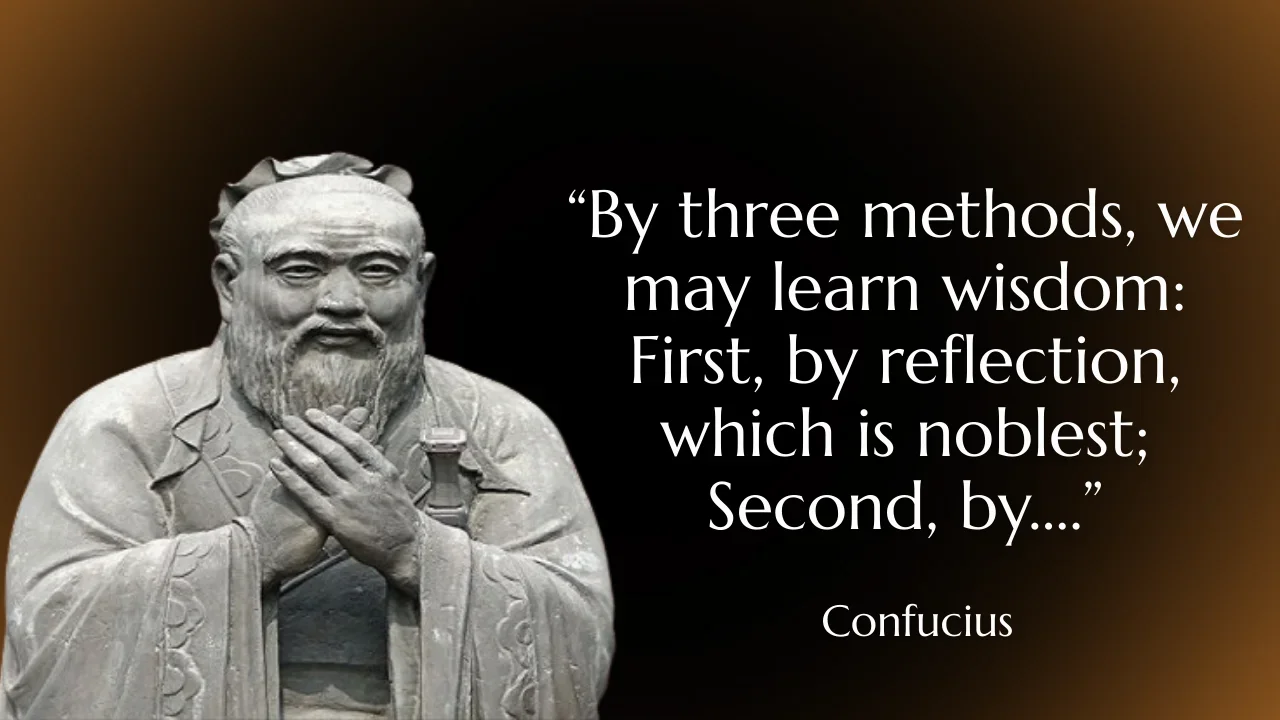
Quote of the Day by Confucius: The Quote of the Day by Confucius is not just a wise saying from the past. It is a timeless message that holds real power today. Confucius, a teacher and philosopher from ancient China, had a gift for putting deep truths into simple words. When he said, “By three methods, we may learn wisdom: First, by reflection, which is noblest; Second, by imitation, which is easiest; and third by experience, which is the bitterest,” he offered a complete guide to personal growth in just one sentence.
In this blog post, we are going to explore what the Quote of the Day by Confucius really means, how each method of learning works, and why these words still matter so much today. You will also get a better understanding of who Confucius was, what he believed in, and how his teachings continue to shape lives and societies in 2026.
Quote of the Day by Confucius
The beauty of the Quote of the Day by Confucius lies in its clarity and relevance. Reflection, imitation, and experience are not random ideas. They are the actual ways we grow. Reflection invites you to look inward and learn from your thoughts and choices. Imitation lets you follow those who have walked the path before you. Experience teaches through real life, often in the most unforgettable ways. Whether you are leading a team, raising children, or working on personal goals, this quote gives you a practical roadmap to become wiser. It is not just theory. It is life advice that works.
Overview Table: Life and Teachings of Confucius
| Topic | Details |
| Full Name | Kong Qiu |
| Birthplace | State of Lu, now Shandong Province, China |
| Birth Year | 551 BCE |
| Philosophy Focus | Ethics, education, personal growth |
| Main Teachings | Reflection, imitation, experience |
| Legacy Work | Analects (compiled by disciples) |
| Central Virtue | Ren (kindness and humaneness) |
| Influence Region | China, Korea, Japan, Vietnam |
| Impact on Society | Shaped government, education, ethics |
| Famous Quote | “By three methods, we may learn wisdom…” |
Early Life and Struggles of Confucius
Confucius was not born into privilege. He lost his father at a young age and was raised by his mother in modest conditions. What made him stand out was his hunger for knowledge. He spent years studying poetry, rituals, and history. Without formal power or wealth, he built his influence through learning and teaching.

When he tried to bring moral values into government, many rulers rejected him. But instead of giving up, he traveled across different regions, sharing his wisdom with students. His challenges made him more relatable and proved that anyone, regardless of background, could grow wise through effort and discipline.
Ideas That Transformed a Nation
China was in chaos during Confucius’ lifetime, but he believed that people could return to peace by living with moral integrity. He taught that respect, loyalty, and kindness were not outdated values. They were the foundation of a better society. His message was not just for individuals but for leaders too.
When the Han dynasty rose to power, they adopted Confucian values as part of their government structure. Officials were selected based on moral knowledge and ability, not wealth or family background. His influence spread beyond China, shaping values in Korea, Japan, and Vietnam. Even today, these cultures honor education, family ties, and ethical leadership in ways that reflect his teachings.
The Heart of Confucian Thought
At the core of Confucius’ philosophy is the idea of ren—the quality of being kind, respectful, and humane. But this is not something you are born with. It is something you practice. Every act of kindness and every respectful word is a step toward living with ren.
Confucius also taught:
- Li, the rituals and manners that bring order.
- Yi, choosing what is right even when it is difficult.
- Zhi, wisdom that comes from learning and thinking.
- Xiao, deep respect for parents and elders.
These ideas are not just moral rules. They are the building blocks of a strong and healthy life.
The Three Ways to Gain Wisdom
Confucius explained that there are three paths to becoming wise, and each one speaks to a different kind of learning:
Reflection is the noblest. It means thinking deeply about your actions, your past, and your decisions. It helps you grow without pain because it lets you learn before you make mistakes.
Imitation is the easiest. When you watch and follow people who are already wise, you can avoid their mistakes and copy their success. It is a smart way to move forward when you are starting something new.
Experience is the hardest, but also the most lasting. Life teaches hard lessons through success and failure. While it can be painful, the lessons stick because you lived them.
This simple framework from the Quote of the Day by Confucius gives you a choice. You can choose your learning path based on where you are in life.
Confucius’ Lasting Impact on the World
Even after his death, Confucius’ voice lived on through the Analects, a collection of his conversations and teachings written by his students. These writings became the backbone of Confucianism, which has been guiding Asian culture for over two thousand years.

His teachings reach beyond books and classrooms. In modern Asian countries, his ideas influence how leaders act, how families operate, and how young people are taught. Many companies use his principles to guide business ethics and teamwork. Confucius did not just teach people how to think—he taught them how to live.
Two Key Lessons from the Quote
- You are in control of your growth. Whether you learn by thinking, copying, or living, the choice is yours. That makes wisdom something you can pursue at any stage of life.
- Wisdom requires work. It is not something you are given. It takes time, focus, and a desire to grow. The Quote of the Day by Confucius reminds us that the path is open to anyone willing to walk it.
This quote is more than a sentence. It is a personal guide that fits into modern life just as well as it did centuries ago.
FAQs
1. What is the main message of the Quote of the Day by Confucius?
The quote explains that wisdom can be gained through three main methods: reflection, imitation, and experience, each offering its own path to growth.
2. Why is reflection considered the noblest method?
Reflection allows us to learn by thinking about our actions and decisions, helping us grow without needing to go through hardship.

3. What is the easiest way to gain wisdom according to Confucius?
Imitation is the easiest method because it involves learning from others’ successes and avoiding their mistakes.
4. How did Confucius’ teachings shape society?
His teachings influenced government, education, and family values, especially in East Asian countries, and still play a role in leadership and ethics today.
5. Are Confucius’ ideas still useful in today’s world?
Yes, his focus on kindness, responsibility, and learning makes his teachings highly relevant for personal growth and professional development in 2026.