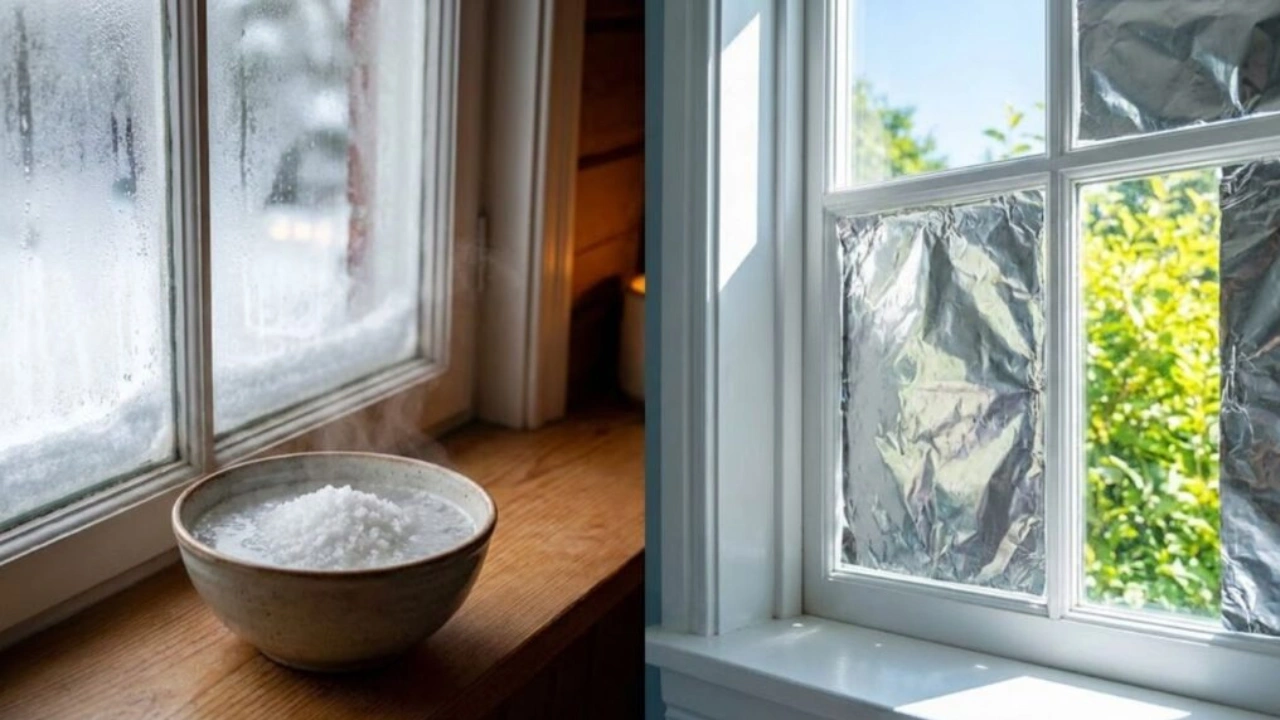
Winter often brings a quiet but frustrating problem into many homes condensation on windows. When warm indoor air meets cold glass, tiny droplets form, creating damp patches that can lead to mold, musty smells, and even damage to window frames. In recent years, a simple household method has gained attention placing a bowl of salt near the window to absorb excess moisture. The Salt Water Bowl Window Trick is being widely discussed as a natural and effortless way to control humidity indoors. Many homeowners claim the Salt Water Bowl Window Trick helps reduce condensation and keeps windows clearer during colder months without expensive equipment or complicated steps.
People are increasingly searching for easy ways to manage indoor dampness, especially in winter when ventilation is reduced. The Salt Water Bowl Window Trick stands out because it uses a basic material found in almost every kitchen. By placing a small bowl of salt on the windowsill, the salt slowly pulls moisture from the surrounding air, helping reduce the formation of water droplets on glass. This method is simple, low cost, and requires almost no maintenance, making it attractive for those dealing with mild condensation problems in bedrooms, living spaces, and even cars.
Salt Water Bowl Window Trick
The Salt Water Bowl Window Trick works because salt has natural moisture absorbing properties. Salt attracts water vapor from the surrounding air, reducing humidity levels near cold surfaces like windows. When less moisture is present in the air, fewer droplets form on glass, helping prevent condensation buildup. This simple method can be especially useful in small rooms, closed spaces, or during cold nights when indoor humidity rises. Many people place a shallow bowl filled with table salt or rock salt on their windowsill and replace it once the salt becomes clumpy. While the Salt Water Bowl Window Trick may not replace proper ventilation or dehumidifiers, it can support moisture control in mildly humid environments and help reduce damp related issues.

Overview Table
| Key Point | Details |
| Main Purpose | Reduce window condensation and indoor dampness |
| How It Works | Salt absorbs moisture from surrounding air |
| Best Season | Winter and cold months |
| Materials Needed | Bowl or jar and table salt or rock salt |
| Placement | Near window or on windowsill |
| Replacement Sign | Salt becomes clumpy or damp |
| Effectiveness | Helps in mildly humid environments |
| Limitation | Less effective in low humidity conditions |
| Additional Benefit | May reduce mold risk and window moisture |
| Alternative Methods | Ventilation, airflow, and dehumidifiers |
Condensation
Condensation forms when warm indoor air carrying moisture meets a cold surface such as window glass. The temperature difference causes water vapor to turn back into liquid droplets. This process is closely linked to the dew point temperature, which is the stage at which air becomes saturated and cannot hold more moisture. When indoor humidity rises, condensation becomes more noticeable, especially in winter when windows are colder. The Salt Water Bowl Window Trick aims to reduce this moisture level slightly, limiting droplet formation. However, condensation is not caused by temperature alone but by the balance between air temperature and moisture content in the environment.
Dealing With Condensation in Vehicles
The same moisture principle applies inside vehicles where condensation often forms on windshields. In cars, the most effective solution is using air conditioning or ventilation systems that remove moisture from cabin air. These systems draw humid air through an evaporator, causing moisture to condense and drain away. Compared to this mechanical process, the Salt Water Bowl Window Trick is much simpler and less powerful. While salt can absorb some moisture in small enclosed spaces like cars, proper airflow and controlled humidity remain the most reliable solutions for preventing foggy windows and interior dampness.
Condensation Buildup in Homes
Managing condensation inside homes can be more challenging because moisture comes from daily activities such as cooking, showering, and breathing. Poor ventilation allows humidity to accumulate, leading to water droplets on windows, damp walls, and eventually mold growth. The Salt Water Bowl Window Trick offers a supportive solution by absorbing small amounts of moisture near windows. Placing bowls of salt on windowsills during colder months may help reduce visible condensation, particularly in rooms with limited airflow. However, it should be seen as a supplementary measure rather than a complete solution for serious dampness issues.

Salt and Moisture Absorption
Salt is known for its hygroscopic behavior, meaning it naturally attracts and holds water molecules from the air. Some salts can even dissolve as they absorb moisture, forming a liquid solution. This property explains why the Salt Water Bowl Window Trick works to some extent. When humidity levels are high enough, salt begins drawing moisture from the air, reducing the water vapor available to condense on windows. However, the effectiveness depends heavily on humidity levels. In environments with moderate or low humidity, salt absorbs very little moisture, which limits its impact on condensation control.
Humidity Levels and Real Effectiveness
Scientific observations show that common table salt does not absorb significant moisture until relative humidity reaches high levels. Many homes typically maintain humidity between 30 and 60 percent, which is below the point where salt becomes highly active. This means the Salt Water Bowl Window Trick may provide only modest benefits in normal indoor conditions. In very humid rooms such as kitchens or bathrooms, the effect may be slightly more noticeable. Still, proper ventilation, airflow, and moisture control remain the most effective ways to manage condensation and prevent damp related problems.
Ventilation Is Key
While the Salt Water Bowl Window Trick can assist with minor moisture control, ventilation remains the most important factor in preventing condensation. Allowing fresh air to circulate reduces indoor humidity and prevents water vapor from settling on cold surfaces. Opening windows slightly, using built in vents, or improving airflow can significantly reduce condensation. Combining ventilation with simple moisture absorbing methods like salt can create better overall results. Good air circulation also helps prevent mold growth, protects window frames, and keeps indoor air healthier during the winter months.

FAQs
1. Does the Salt Water Bowl Window Trick really work?
Yes, it can absorb small amounts of moisture and help reduce mild condensation, but it is not as powerful as proper ventilation or dehumidifiers.
2. Where should I place the salt bowl?
Place it on the windowsill or close to the window where condensation usually forms for best results.
3. How often should the salt be replaced?
Replace the salt when it becomes clumpy, damp, or starts dissolving, which means it has absorbed moisture.

4. Can this method prevent mold completely?
It may help reduce moisture slightly, but preventing mold requires proper ventilation and humidity control.
5. Is this trick safe for daily use?
Yes, it is a simple and safe household method as long as the bowl is kept stable and replaced regularly.