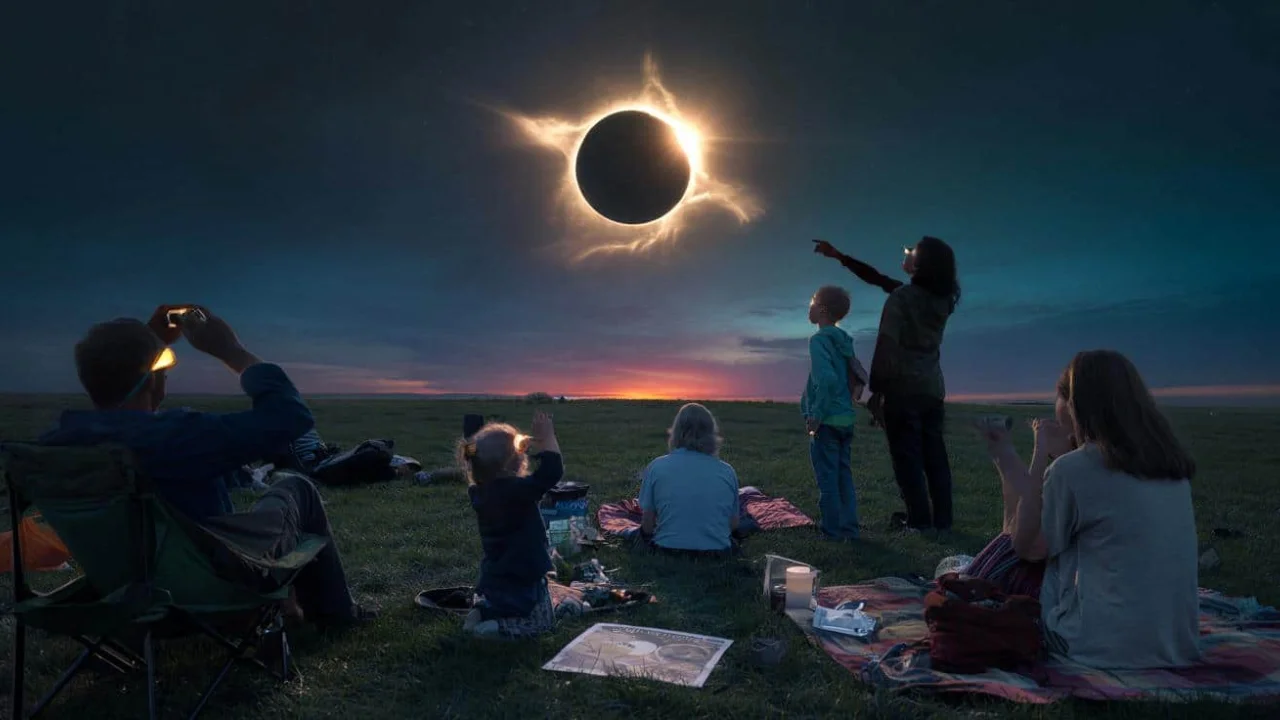
Longest Total Solar Eclipse: The longest total solar eclipse has always captured human curiosity because it transforms the familiar daylight world into something rare and almost unreal. When the sky goes dark in the middle of the day, the air shifts, the temperature drops, and people everywhere pause to witness a moment that cannot be recreated by anything else in nature. This sudden change creates a sense of wonder that makes the event feel both ancient and new each time it happens.
In this article, we explore what the longest total solar eclipse really means, why it matters, and how such a short moment can leave a lasting impact on people around the world. You will find an easy explanation of how it works, what affects its duration, the most important facts, and why these rare moments remain unforgettable. Below is a complete overview based on essential eclipse information to help you understand the topic in a simple and clear way.
Understanding the Longest Total Solar Eclipse
Before diving deeper, it is helpful to see the main facts in one place. The table below gives a quick overview of how a total solar eclipse works and what makes the longest ones so special.
Overview Table
| Key Point | Simple Explanation |
| What is a total solar eclipse | The Moon fully blocks the Sun for a short time |
| Why it becomes dark | The Moon’s shadow covers a narrow part of Earth |
| Reason for different durations | Distance between Earth, Moon, and Sun changes |
| Maximum possible duration | Around 7 minutes and 30 seconds |
| Why it is rare | Perfect alignment happens only a few times per century |
| What people feel during it | Sudden darkness, cooler air, and quiet atmosphere |
| What makes the longest eclipse magical | It extends the rare moment when day turns into night |
How Total Solar Eclipses Form
A total solar eclipse happens when the Moon moves directly between the Earth and the Sun, covering the Sun completely. This creates a path of deep shadow known as the path of totality. Only places inside this narrow path see the full effect. When the alignment is perfect, the daylight fades quickly, and the sky becomes a deep twilight. Stars appear, animals change their behavior, and the world feels paused for a few minutes.
For an eclipse to last longer, the Moon must be closer to Earth, the Earth must be closer to the Sun, and the alignment must fall at just the right angle. These conditions rarely happen at the same time, which is why the longest total solar eclipse is so uncommon.

What Controls the Duration of Totality
Several natural factors decide how long the darkness will last. The Moon does not travel in a perfect circle, and neither does the Earth. The distances change, affecting the size of the Moon’s shadow.
Below are the main factors:
• The Moon is closer to Earth, making its shadow larger
• The Earth is near its farthest point from the Sun
• The alignment hits the center of the shadow
• The path of totality stretches over the equator, where Earth rotates faster
When all these elements work together, the duration increases. This is why totality rarely reaches its maximum possible length. Most eclipses last only one to three minutes, but the longest total solar eclipse pushes past these limits.
Why Long Total Solar Eclipses Are So Rare
Long eclipses do not occur often because the solar system’s movements do not usually align in the required way. Even when they do, the total path is tiny compared to the Earth’s surface. Most people in the world never stand in the right place at the right time to witness the longest moments of darkness.

Another reason they are rare is the pace at which the Moon moves. It travels fast, crossing the sky in a smooth but quick path. Even at its longest, totality remains under eight minutes. That short moment, however, feels surprisingly long when the world goes quiet.
How People Experience the Longest Total Solar Eclipse
People who have seen a long eclipse often describe it as unforgettable. The temperature drops, shadows sharpen, and the world becomes still. As the Sun’s last light disappears, a ring of light known as the corona appears. This soft glow makes the event feel almost magical.
During the longest total solar eclipse, these sensations last longer, giving everyone more time to take in the view. Many travelers plan years ahead to stand in the path of totality. Some describe the experience as emotional, while others call it peaceful or surprising. No matter how people explain it, the moment creates memories that last a lifetime.
Scientific Value of Long Eclipses
Longer eclipses give scientists more time to study the Sun’s outer atmosphere. This part of the Sun is usually hidden by sunlight, so an extended period of darkness creates a rare chance for observation.
Scientists focus on:

• Studying the corona
• Tracking solar wind patterns
• Watching how light bends around the Moon
This extra time during the longest events helps researchers collect data that cannot be gathered in any other way. The longer the eclipse, the more detailed the research becomes.
Historical Importance of Long Eclipses
Throughout history, many cultures viewed eclipses as signs or symbols. People often connected the dark sky to myths, beliefs, or major events. The longest ones left even stronger impressions because the darkness lingered. Ancient writings mention fear, amazement, and wonder, reflecting how much impact these rare events had on early civilizations.
Today, we understand the science behind them, but the emotional effect remains strong. Even with modern tools, the moment feels just as powerful as it did hundreds of years ago.
FAQs
Why does totality last only a few minutes
Because the Moon moves quickly and its shadow crosses Earth in a narrow path, the darkness is short.

How long can the longest total solar eclipse last
It can reach about seven and a half minutes, which is the upper limit under ideal conditions.
Why does the sky get so dark during totality
The Moon blocks all direct sunlight, allowing only the faint glow of the corona to remain.
Can everyone see a total solar eclipse
No, only people standing within the path of totality can see the full effect.
Why are long eclipses so special
Because they extend a rare chance to see day turn into night and create a moment that feels almost magical.