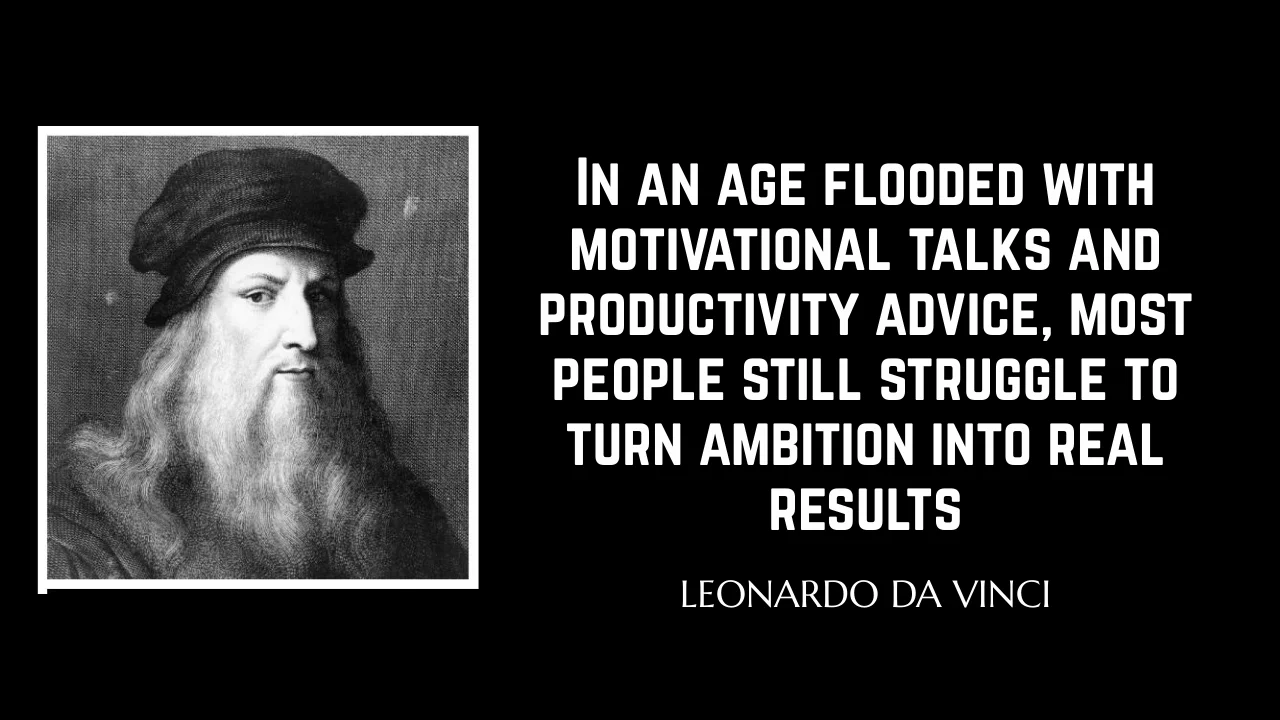
Leonardo da Vinci: Leonardo da Vinci often appears as a symbol of human potential. In a world full of daily motivation, tips, and endless advice, many people still find it hard to convert ambition into real progress. People want to grow, create, and achieve, yet they feel stuck between intention and action. This struggle is not new, but today’s noisy world makes it feel even louder. The gap between dreaming and doing is wide, and this article explores why the lessons from a timeless mind can still guide us today.
This article takes a closer look at how Leonardo da Vinci approached work, learning, and discipline. It explains what made his methods effective and how his habits can inspire a more focused and meaningful approach to achieving goals. You will find an overview table for quick insight, followed by clear headings based on core ideas about curiosity, discipline, skill building, and real results.
Understanding Leonardo da Vinci
This section explains the key qualities and working methods that made Leonardo da Vinci stand out. It also sets the stage for how these ideas can apply to modern life, especially for people struggling to turn goals into action.
Overview Table
| Aspect | Insight |
| Curiosity | Leonardo explored many fields from art to science with deep interest. |
| Observation | He carefully studied nature, movement, and human behavior. |
| Discipline | He worked for long hours in structured ways despite distractions. |
| Creativity | His ideas came from combining knowledge from different fields. |
| Habit of Note-taking | He wrote and sketched constantly to capture every idea. |
| Long-term Vision | He focused on growth over time rather than quick results. |
Curiosity That Never Stopped
One of the strongest qualities of Leonardo da Vinci was his endless curiosity. He questioned simple things like how birds fly or how water moves. He did not seek answers only for work but because understanding the world excited him. This approach built a natural desire to learn, and learning became the root of his creativity. Curiosity pushed him forward even when tasks were challenging.

Today, people often lose focus because they chase results instead of the learning process. Leonardo’s life shows that when curiosity leads, progress becomes much easier. Curiosity keeps the mind active and makes difficult tasks feel meaningful instead of tiring.
Observation as a Daily Habit
Leonardo didn’t just look at things. He observed them. From human faces to moving shadows, he trained his eyes to notice details others ignored. This deep attention helped him create art that felt alive and scientific ideas that were ahead of their time.
Many people today struggle with results because distraction replaces observation. Leonardo’s habit shows that sharpening attention is a powerful tool. When you study your goals, challenges, and environment closely, the path becomes clearer.
Discipline Without Noise
Even though he was known for having many interests, Leonardo da Vinci practiced discipline. He divided his work, took careful notes, and returned to tasks even after long breaks. His discipline was quiet, steady, and simple.
In today’s world, motivation is loud but often short-lived. People get inspired for a moment but lose direction quickly. Leonardo’s example teaches that discipline does not need hype. It needs steady action, one small step at a time.
Turning Ideas Into Experiments
Leonardo believed ideas were only useful when tested. He did not stop after imagining something. He drew it, studied it, and tried to build it. This approach of experimenting allowed him to refine his concepts and understand mistakes faster.
Many people today face a gap between dreams and results because they stay in the idea stage. They think, imagine, and plan but hesitate to try. Leonardo’s method shows that progress comes when ideas move into action.
Learning From Many Fields
One of the reasons Leonardo da Vinci became a genius was his wide learning. He studied painting, anatomy, math, music, engineering, and more. This mix of knowledge helped him connect ideas and solve problems in new ways.
People often limit themselves by staying in one area. Leonardo teaches that learning from different fields opens new doors. When you explore more, your creativity expands, and solutions become easier to find.
Note-taking as a Power Tool
Leonardo filled thousands of pages with sketches, ideas, lists, and questions. These notebooks helped him keep track of thoughts and return to them later. His note-taking was simple but powerful.
In modern life, capturing ideas is still one of the best ways to stay organized and motivated. Many people forget their thoughts or lose clarity because they do not record them. Note-taking turns scattered ideas into useful steps.
Building Skills Over Time
Leonardo’s skills grew because he practiced them consistently. Whether drawing or studying science, he returned to his work over the years. His growth came from patience, not rush.

People often want fast results today. But Leonardo’s life proves that skill building takes time. Long-term effort creates true mastery.
Key Lessons From Leonardo da Vinci
Here are two practical lessons inspired by his way of working.
- Stay curious every day
Small questions lead to new ideas and better understanding. - Take action instead of waiting
Ideas grow only when you test them through real work.
FAQs
Why is Leonardo da Vinci still studied today?
He is studied because his work in art, science, and invention shows a unique mix of creativity and discipline that still inspires people.
How did Leonardo stay motivated?
His natural curiosity and desire to understand the world kept him motivated more than external pressure.

What made Leonardo’s learning style different?
He learned by observing, experimenting, and connecting ideas from many fields.
Can Leonardo’s methods help modern people?
Yes, his habits of curiosity, note-taking, and steady practice can help anyone improve their focus and productivity.
What is the biggest lesson from Leonardo’s work?
The biggest lesson is that action, not just ambition, creates real results.