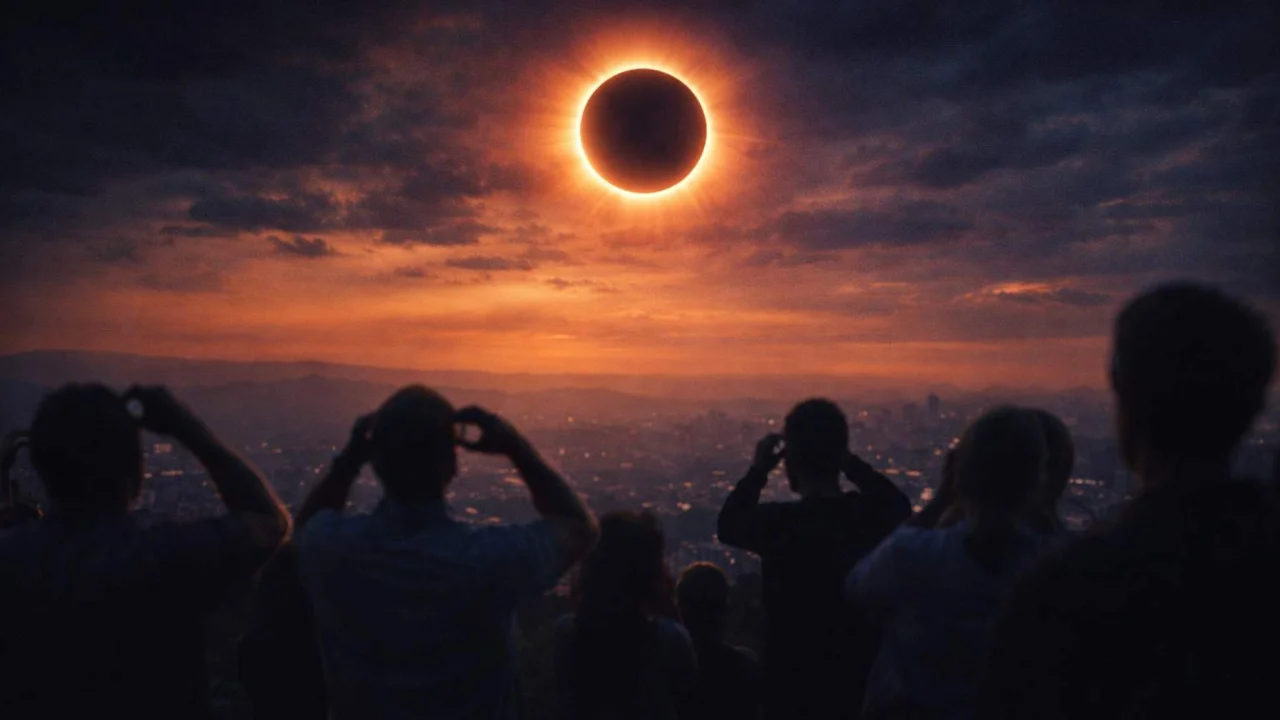
Longest Total Solar Eclipse: The longest total solar eclipse is not just another date marked on the calendar. It is a rare moment when nature decides to pause, offering us a front-row seat to one of the universe’s most breathtaking shows. Imagine standing under a bright afternoon sky and watching it slowly dim until you are surrounded by twilight. That is the power of this extraordinary event. For a few minutes, everything around you changes—colors, sounds, temperatures, even emotions.
In February 2026, millions will gather along the path of totality to witness the longest total solar eclipse of this century. Unlike typical eclipses that last only a few minutes, this one will stretch on for over seven minutes in some places. It will cross continents, casting a long shadow and bringing people together in wonder. In this blog, you will learn what makes this eclipse so unique, where to see it, what to expect, and how to make the most of this once-in-a-lifetime moment.
Why the Longest Total Solar Eclipse is a Once-in-a-Century Experience
What sets this event apart is not just the fact that it is a solar eclipse, but how long it will last. This is the longest total solar eclipse we will see in our lifetime, with a maximum duration of around 7 minutes and 10 seconds. That is nearly double the length of an average eclipse. This rare alignment happens because the Moon will be at just the right distance from Earth to completely cover the Sun, and Earth will be closer to the Sun, making it appear slightly larger in the sky.

During this time, the Sun’s corona becomes visible, stars may appear in the sky, and the temperature can drop significantly. If you are in the right spot, you will experience a unique calmness. Wildlife changes behavior, people grow silent, and the entire atmosphere feels charged. These moments are not just beautiful, they are emotional. Scientists, travelers, families, and first-time viewers will all be sharing in something that goes far beyond science. It is something you will remember for the rest of your life.
Overview Table
| Aspect | Details |
| Event Type | Total Solar Eclipse |
| Duration of Totality | Up to 7 minutes and 10 seconds |
| Date of Eclipse | February 2026 |
| Visibility Path | Crosses multiple continents |
| Viewing Requirement | Must be located in the path of totality |
| Light Changes | Bright afternoon light turns into twilight |
| Temperature Drop | Can decrease by 10 degrees or more |
| Animal Behavior | Birds go quiet, animals act differently |
| Scientific Relevance | Perfect chance to observe Sun’s corona |
| Viewing Tip | Look for clear skies and avoid city lights |
When the Sun Blinks and the World Goes Quiet
There is something eerie yet beautiful about watching the Sun fade away during the day. As the Moon begins to cover the Sun, daylight changes slowly but noticeably. The light around you turns sharper, cooler, and your surroundings begin to take on a strange, silvery tone. People around you may fall silent without realizing it. It feels as though the world is holding its breath.
Then comes the moment of totality. The longest total solar eclipse will allow you to soak in that silence and stillness for much longer than usual. Streetlights may come on, stars will twinkle above, and the horizon will glow with a 360-degree sunset effect. It is not something you just look at. You feel it. You hear the silence. You see the world respond. Even those who have seen many eclipses agree: no two are the same, and this one is expected to be truly unforgettable.

How to Actually Experience It, Not Just Watch It
Watching an eclipse is one thing. Experiencing it fully is something else entirely. First, you need to plan ahead. The best views of the longest total solar eclipse will be in the center of the path of totality. Use detailed eclipse maps to find your spot, and make sure you check the weather forecast. A single cloud could block the view at the crucial moment.
Bring eclipse glasses—real, ISO-certified ones—not sunglasses or makeshift filters. Pack essentials like water, snacks, a chair, and an extra jacket, because the temperature will likely drop. Most importantly, when the eclipse begins, put down your phone or camera. Be in the moment. Notice the shadows changing shape, feel the chill, listen to the silence around you. That is how memories are made.
What This Eclipse Might Change in Us
There is something powerful about millions of people pausing at the same moment to look up at the sky. During the longest total solar eclipse, that shared experience will stretch across countries and cultures. It is not just about astronomy; it is about connection. Grandparents will hold hands with grandchildren. Friends will trade eclipse glasses with strangers. Scientists will stand beside school kids, all looking up in awe.

Many people describe their first total solar eclipse as life-changing. It shifts your view of the world, of time, of nature. This event has the potential to inspire, to teach, and to bring people closer. It is a reminder of how small we are, yet how deeply we feel wonder.
The Strange Psychology of Sudden Daytime Night
Our minds are not used to the idea of night arriving at midday. That unexpected darkness plays tricks on our senses. It triggers awe, curiosity, and sometimes even confusion. As the Sun disappears, you will notice animals reacting—dogs may whine, birds go quiet, and crickets may begin to chirp.
The longest total solar eclipse gives us more time to observe these strange changes. The sky above turns dark, while the horizon glows. It feels like sunset in every direction. You might even see Venus or Jupiter shining clearly. The air feels heavier, the light becomes cold, and for those few minutes, everything is different. That is what makes eclipses so powerful—they change not just what you see, but how you feel.

Tips to Prepare for the Eclipse
- Locate the path of totality and try to be as close to the center as possible
- Monitor the weather and have a backup location in case of clouds
- Use only ISO-certified eclipse glasses to protect your eyes
- Pack essentials like water, food, a folding chair, and warm clothing
- Be fully present during totality and avoid spending it behind a screen
FAQs
How long will this eclipse last?
In some places, the eclipse will last up to 7 minutes and 10 seconds, making it the longest of this century.
Is it safe to watch the eclipse without glasses?
It is only safe to look without glasses during totality. For all other phases, you must use proper eclipse glasses.
Where is the best place to view the eclipse?
Anywhere along the center of the path of totality with clear skies is ideal. Use maps and forecasts to find the best location.

Do I need a telescope or camera to enjoy it?
No. All you need is a good view, eclipse glasses, and your full attention. Technology is optional.
What unusual things happen during an eclipse?
Expect temperature drops, odd animal behavior, sudden darkness, and a glowing horizon. It is a full sensory experience.