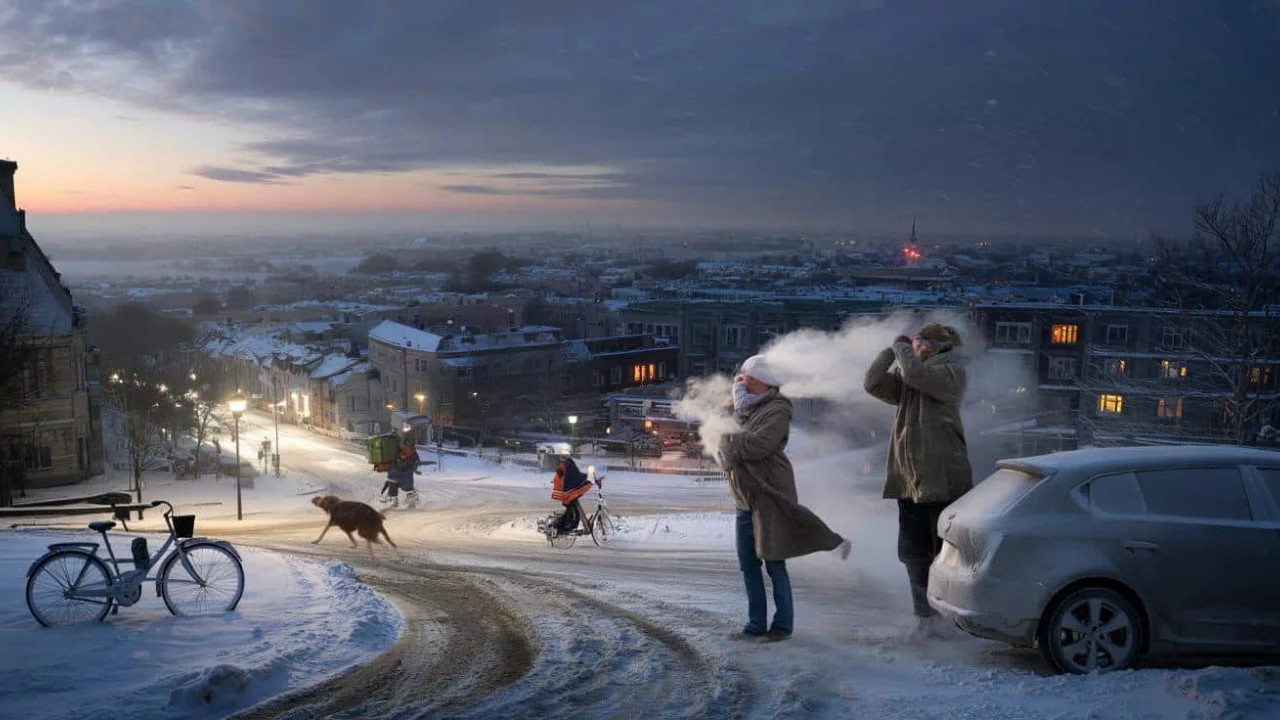
Early Polar Vortex Shift February: Winter sometimes whispers, but this year it is roaring. The Early Polar Vortex Shift February is not unfolding quietly in the background of weather charts. It is showing itself through sudden cold plunges, violent temperature swings, and unusual atmospheric signals that scientists rarely see this early in the season. Many regions are witnessing dramatic drops in temperature, icy winds, and unstable winter patterns that feel sharper and more unpredictable than usual.
The Early Polar Vortex Shift February is drawing global attention because its timing and intensity are far outside typical February behavior, raising serious questions about how the atmosphere is changing and why extreme winter events are becoming more volatile in recent years.
Early Polar Vortex Shift February
The Early Polar Vortex Shift February refers to a powerful disturbance high in the stratosphere where the polar vortex normally spins like a stable ring of cold air around the Arctic. When this system weakens or shifts, icy Arctic air spills southward into North America, Europe, and parts of Asia, triggering deep freezes and chaotic weather. This February, satellite data and atmospheric measurements show unusually strong warming in the Arctic stratosphere, weakening the vortex and pushing it off balance. Scientists say such a strong disruption this early in February is rare, and its ripple effects may continue for weeks, influencing storms, temperature swings, and long range climate behavior across the Northern Hemisphere.
Early Polar Vortex Shift February Overview Table
| Indicator | What It Shows |
| Stratospheric Temperature Rise | Sudden warming detected over the Arctic |
| Polar Vortex Strength | Significant weakening and displacement |
| Jet Stream Behavior | Increased looping and instability |
| Arctic Temperatures | Warmer than seasonal average |
| Mid Latitude Weather | Sudden deep freezes and cold outbreaks |
| Event Timing | Rare intensity for early February |
| Global Pattern | Disrupted winter circulation |
| Weather Volatility | Sharp swings between cold and mild |
| Long Term Climate Signal | Linked to Arctic amplification |
| Forecast Outlook | Continued instability expected |
The Night the Sky Broke Open
Meteorologists often describe polar vortex disruptions using scientific language, but for many people the experience feels raw and immediate. Temperatures plunge rapidly, winds intensify, and the cold becomes severe enough to strain infrastructure and daily life. During this Early Polar Vortex Shift February, weather stations recorded dramatic temperature drops within hours, not days. Such rapid cooling happens when the protective ring of winds around the Arctic weakens, allowing frozen air to surge southward.

This phenomenon begins far above the surface in the stratosphere, about thirty kilometers high. Energy waves rising from lower atmospheric weather systems disturb the spinning vortex. When these waves are strong enough, they slow the vortex or even split it. Once disrupted, the cold air that normally stays trapped near the North Pole spreads into populated regions, causing extreme winter conditions.
Listening to the Wind While the Numbers Speak
Scientific measurements confirm what many people are already feeling. Satellite observations, weather balloons, and surface data all indicate a major disturbance in the polar vortex structure. The Early Polar Vortex Shift February has produced strong stratospheric warming, one of the key signals that the vortex is weakening.
When the vortex shifts, the jet stream also becomes unstable. Instead of flowing smoothly, it begins to loop and stall. These loops allow cold air to dive south while warm air pushes into the Arctic. This explains why some regions experience severe cold while the Arctic itself can be unusually warm at the same time. Researchers say this growing volatility reflects broader atmospheric changes influenced by long term warming trends.
Cold Air, Hot Planet The Paradox We Keep Misunderstanding
A common misconception is that extreme cold disproves global warming. In reality, climate and daily weather are different. The Early Polar Vortex Shift February demonstrates how warming can actually contribute to stronger cold outbreaks. As the Arctic warms faster than the rest of the planet, the temperature contrast that stabilizes the polar vortex weakens. This makes the vortex more vulnerable to disruption.

When the vortex weakens, cold air escapes southward in powerful bursts. At the same time, warm air enters the Arctic, reinforcing instability. Scientists continue to study the precise connection, but evidence suggests that a warming climate increases the likelihood of unusual and extreme winter patterns rather than eliminating cold weather altogether.
Record Breaking Again How Unprecedented Lost Its Shock
In recent years, extreme weather events have become more frequent. Heatwaves, floods, wildfires, and winter extremes now occur with growing regularity. The Early Polar Vortex Shift February stands out because of its unusual timing and strength. Historical records show only a few events of similar intensity occurring this early in the season.
What makes modern events different is the climate background in which they occur. Earlier disruptions happened in a cooler and more stable climate. Today, they unfold in a warmer atmosphere that already contains more energy. This combination can amplify the impact of polar vortex shifts, leading to stronger storms, sharper cold waves, and more erratic seasonal transitions.
The Politics of Looking Away
Extreme winter events often spark public debate about climate change. Some observers point to cold temperatures as evidence against warming trends. However, scientists emphasize that individual weather events must be viewed within long term patterns. The Early Polar Vortex Shift February is part of a broader trend of increasing climate variability rather than an isolated anomaly.

Communities across affected regions face real challenges during such disruptions. Infrastructure stress, energy demand spikes, and transportation disruptions all become more likely. Understanding the science behind these events is essential for improving preparedness and resilience rather than dismissing them as temporary anomalies.
What It Feels Like to Wake Up
For many people, climate change is not understood through scientific reports but through lived experience. Winters that once felt predictable now behave differently. Sudden cold waves arrive without warning, followed by unusual warmth. The Early Polar Vortex Shift February reflects this growing unpredictability.
Seasonal patterns are shifting. Some regions experience milder winters overall but sharper cold outbreaks when disruptions occur. This creates emotional and practical challenges as communities adjust to changing climate rhythms. Observing these changes often leads to greater awareness of how atmospheric systems are evolving.
Beyond the Vortex Choosing Our Next Story
The current Early Polar Vortex Shift February will eventually weaken as atmospheric balance returns. However, its broader implications remain significant. Scientists are closely monitoring how often such disruptions occur and how they interact with long term warming trends.

Technological and scientific advances are helping improve forecasting and preparedness. Understanding polar vortex behavior allows meteorologists to predict cold outbreaks earlier, giving communities time to prepare. At the same time, research continues into how climate patterns may influence future winter extremes.
FAQs
What is a polar vortex shift
A polar vortex shift occurs when the strong circular winds around the Arctic weaken or move off center. This allows extremely cold Arctic air to spill into lower latitude regions, causing severe winter weather.
Why is this February event unusual
The Early Polar Vortex Shift February is unusually strong and early in the season. Events of this magnitude rarely occur at this time of year, making it notable for scientists and meteorologists.
Can global warming cause extreme cold
Yes. Global warming changes atmospheric patterns. A warming Arctic can weaken the polar vortex, making cold air outbreaks more likely even in a generally warming climate.

How long can the effects last
The effects of a polar vortex disruption can last several weeks. Weather patterns may remain unstable with alternating cold and mild periods during that time.
Will such events become more common
Scientists are still studying this question. However, evidence suggests that changing climate conditions may increase atmospheric instability, potentially making unusual winter disruptions more frequent.