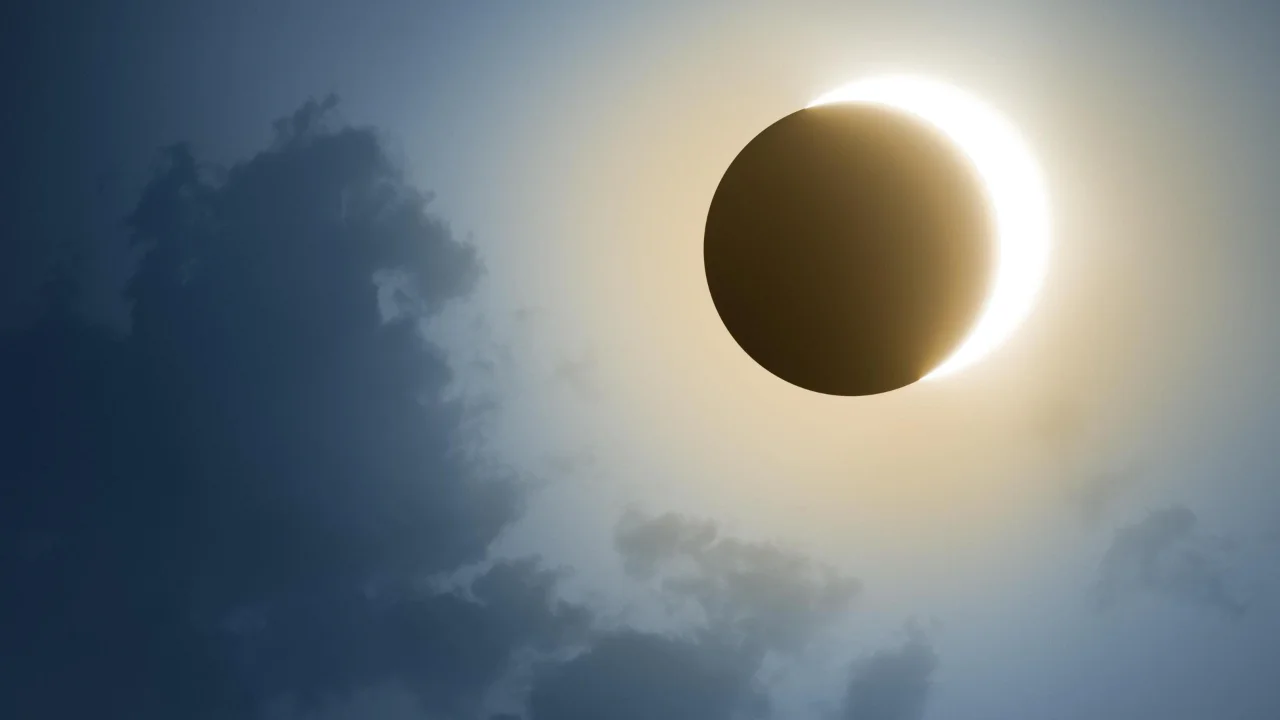
Longest Total Solar Eclipse: The longest total solar eclipse is one of those rare events that instantly captures human imagination. It is not just an astronomical sight, but a moment when daylight fades, temperatures drop, and the world pauses to watch the sky transform. People across cultures have always felt a deep connection to this event because it brings a mix of wonder and stillness that feels unlike anything else in nature.
In this article, you will learn what makes the longest total solar eclipse so special, why it lasts longer than other eclipses, and what factors shape its path and timing. We will also look at key details, scientific insights, and simple explanations that help you understand this event without complex terms. The goal is to give you a clear overview and a smooth reading experience without heavy science words.
Understanding the Longest Total Solar Eclipse
The longest total solar eclipse happens when the Moon covers the Sun in the most perfect way for an extended time. Unlike a normal eclipse, this one reaches a maximum point where total darkness lasts longer than any other eclipse cycle. This depends on the Moon being close to Earth, the Earth being near its farthest point from the Sun, and the alignment happening along the equator where Earth rotates the fastest. All these conditions together create the longest possible shadow and the longest duration of totality.
Overview Table
| Key Factor | Description |
| Alignment | Sun, Moon, and Earth aligned in a straight line creating full shadow |
| Duration | Longest totality occurs when the Moon appears larger and closer |
| Maximum Length | Can reach up to around 7 minutes depending on conditions |
| Path of Totality | Narrow path where the Sun is fully covered |
| Influencing Conditions | Earth’s rotation, Moon’s orbit, and distance changes |
| Visibility | Only seen from specific locations along the eclipse path |
| Observation | Widely studied by agencies like NASA |
Why Duration Changes Over Time
The duration of the longest total solar eclipse depends heavily on distance and motion. The Moon does not orbit Earth in a perfect circle. Sometimes it is closer, and sometimes it is farther away. When the Moon is closer, it looks bigger and can cover the Sun more completely, creating a longer total eclipse.

Earth also moves around the Sun in an orbit that is not perfectly even. When Earth is farther from the Sun, the Sun appears slightly smaller, making it even easier for the Moon to cover it fully. These small changes allow the total eclipse to last longer in some years and shorter in others.
How Scientists Study These Events
Astronomers use advanced tools to observe the longest total solar eclipse. They record temperature drops, animal reactions, changes in solar wind, and the Sun’s outer atmosphere known as the corona. This is the only time the corona becomes fully visible to the naked eye.
Space agencies, especially European Space Agency and NASA, use this rare moment to gather data they cannot collect at any other time. Such events help scientists better understand solar activity, which also affects satellites, radio communication, and even power systems on Earth.
What Happens During Totality
During the longest total solar eclipse, several natural changes occur at the same time. The sky darkens quickly, shadows become sharper, and colors change in a dramatic way. Birds grow quiet, winds slow down, and the temperature can drop suddenly.

This moment feels unique because it brings silence and darkness together in the middle of the day. For many people, this creates an emotional experience that is both peaceful and exciting. The Sun’s corona forms a bright ring around the Moon, and this sight is considered one of the most beautiful views in nature.
Key Reasons This Eclipse Becomes the Longest
- The Moon is closer to Earth, appearing larger
- Earth is farther from the Sun, making the Sun appear smaller
- The eclipse aligns near the equator, where Earth’s rotation increases the duration
- The shadow travels over regions that allow the path to extend longer
How to View the Longest Total Solar Eclipse Safely
Watching the longest total solar eclipse requires simple but essential safety steps. Never look at the Sun without certified eclipse glasses. Ordinary sunglasses cannot protect your eyes. Use solar filters on cameras, telescopes, or binoculars to prevent damage.

During the short moment of totality, when the Sun is fully covered, it is safe to view it with the naked eye. But the instant sunlight returns, even slightly, eye protection is required again. Many science organizations provide safety guidelines for every major eclipse event.
Why People Travel Across the World for This Event
Some people travel long distances just to witness the longest total solar eclipse. This is because the path of totality is often narrow and moves across oceans, deserts, or remote regions. Eclipses do not repeat in the same place for centuries.

Travelers chase this event for the rare chance to see darkness cover the sky in the middle of the day. Many describe it as a life-changing moment. Photography groups, skywatchers, and science communities often gather in the best viewing spots to share the experience.
FAQs
1. How long can the longest total solar eclipse last?
It can last up to around seven minutes, depending on how close the Moon is to Earth and how the Sun, Moon, and Earth align.
2. Why is this eclipse longer than others?
Because the Moon appears larger and the Sun appears smaller during certain positions in their orbits, creating a longer moment of totality.
3. Can anyone see the longest total solar eclipse?
Only people within the path of totality can see the full event. Others may see a partial eclipse.

4. Is it safe to watch the total eclipse without glasses?
It is only safe during totality. At all other times, certified solar glasses are required.
5. Why do scientists study this event so closely?
It allows them to observe the Sun’s corona and other solar activity that cannot be seen at any other time.